Archives

electronics and sculpture: first post

I’m going to be posting more ideas and experiments in the fabrication/sculpture realm here, as it may contribute to my work in this class, though they may not directly have anything electronic (but maybe later). It’s my first term in the DCRL and I’m in constant discovery mode.
For now: my first project: (different then a week ago) cytoplasm lamp! (or cytoplasm interactive sculpture)
I am quite interested in how crazy crowded the cytoplasm of a cell is vs. how it is usually shown:

^saddest looking cell ever btw VS
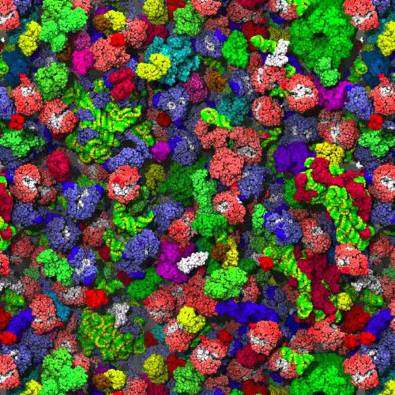
^This one doesn’t even show water.
How we depict things in science can really change how we learn about them (and dream about them).
I took a scanning electron micrograph a while back in which I accidentally kicked off a piece of the top of a cell, revealing a dense cytoplasm. The proteins are not tagged so you cannot tell them…
View original post 194 more words
Get the word out~
mask: insect inspiration
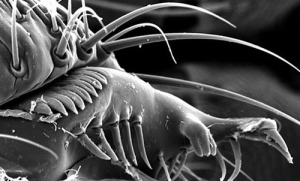
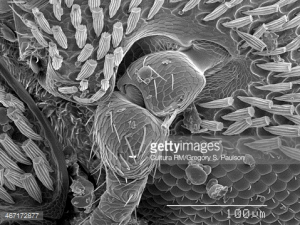
After MUCH thought I’ve abandoned visual for tactile- I will create a mask inspired by insect exoskeletons, with moveable ‘sensory hairs’ pressed against the face. Insects are covered with numerous barbs/hairs called setae, some of which have sensory purposes. Their exoskeleton is formed out of a resin-like protein called chitin. When imaged with the scanning electron microscope, the exoskeleton can look as if made of opaque plastic- because of this I’ve been dying to 3D print forms inspired by electron microscopy.




Get the word out~
DIY Seashore Themed Tutorial #3: Starfish Table Number Holder and Photo Display

Table numbers are the ideal DIY project – especially when you have fairly intimate gatherings. Because each table only needs one number, these handmade starfish card-holders add both individuality, and organization to your event. As a sustainable option, each starfish also doubles as a take-away photo display clip.

Step 1: Choose the shape and color of your place-card background. You can cut it out yourself, use a die-cut machine, or purchase pre-cut cards in many different styles. I used this Hello Kitty lid as a template for cutting out my circular design with scalloped edges.

Each place card requires at least one base starfish, a miniature clothespin, cardstock paper (at least two contrasting colors), a pencil, glue dots, a glue gun, scissors, and (optional) decorative epoxy clay (or other) shapes.

Step 2: Draw or trace a number to represent each table. Cut the number out.

You can check to see if your colors have enough contrast by placing the cut-out number on top of your card’s base.

Step 3: Flip the number over and place glue dots on the back side. You can use all-purpose glue or rubber cement to attach your numbers; however, glue dots are easier to control, and give your design a 3-d effect.

Experiement with mixing and matching different color combinations to achieve a harmonious palette that reflects your event’s theme.

If desired, you can mold epoxy clay shapes to attach to your card-holder. I made these awhile ago. Remeber to allow them to dry before attaching them. You can also use epoxy clay to attach your clothespin, if desired.

Step 4: Use glue gun to attach decorative shapes to starfish.

Step 5: Use glue gun to attach clothespin to decorative elements, or glue directly onto starfish base. Make sure you leave enough room to allow you to pinch the clothespin to attach the table number.

Pinch gently to attach table number.

The perfect, multi-purpose design to bring the seashore to any time, place or venue.

This design is repurposed as a photo holder. Thinking of novel ways to use wedding, party, and event-planning supplies ensures that future generations can also enjoy the resources and natural gifts we do. My grandparents made it possible for me to live, thrive and prosper – and they also taught me how to find value in even the most mundane items. Their smiling faces in this photo remind me that it is a shared, universal gift and burden to care for a living earth.

Cluster a few colorful metal pails, floral arrangements in glittered baskets, and starfish table numbers to build your own, customized tablescape.
Get the word out~

DIY Seashore Themed Tutorial #2: Crystal Hairpins for Bridesmaids, Gift-Giving, and Adding Summer Sparkle to Everyday Life

This design tutorial expands upon the summer seashore theme. Creating your own gifts, jewelry and mementos gives you both more personalization options, as well as a deeper sense of connection to the relationships, emotional bonds, and memories we share. This easy crystal hairpin design is perfect for bridesmaids, friends, and younger girls alike.

For each barrette, you will need (a) plain bobby pin, (b) 3x 4mm bicone crystal beads (shown here in aquamarine satin), (c) 3x 6mm beads (you can use bicones or rounds; in this image, Czech crystals in light turquoise), (d) colored wire (gauge small enough to string beads), and (e) jewelry pliers (not shown).

Step 1: Twist the wire around the looped end of the bobby pin to create a secure connection for adding beads. Twist wire around several times to ensure durability.

Step 2: Slide coiled wire onto the “top” (bumpy/wavy) side of the barrette. Add the first 4mm bicone bead to the wire.

Step 3: Twist the wire around the hair pin to secure the bead. This step only requires one pass over the arm of the pin.

Step 4: Add the first 6mm bead, repeating the same steps used to secure the previous bead. Do not forget to secure it with a single loop before adding another bead.

Step 5: Repeat previous steps, alternating between the 4mm and 6mm beads, until the barrette is finished. Complete the end with several more loops, pulled tightly into a coil (same as Step 1). Use pliers to clip off excess wire and trim any sharp ends.

To further personalize, cut out a circle of printed paper in a coordinating color. Use decorative paper punches to cut out themed motif if desired (shown here, starfish).

Use a pen to write a personalized message, monogram, or to add details – like a person’s name, a special date, or an inspirational quote.

Coming up next: Bracelet tutorial.

And later… Table place and name cared tutorials!

Summer celebrations are about family, friendship, and the beauty of nature. Adopt a DIY lifestyle to infuse your life with both a greater sense of meaning, as well as a more sustainable, eco-friendly philosophy.
Get the word out~

DIY Seashore Themed Tutorial #1 ~ Crystal “Starfish” for Summer Weddings and Other Celebrations

This easy-to-build beaded starfish design is the perfect DIY decoration, gift, party favor, or memento for seashore-themed special occasions and celebrations.

Materials: (1) Wildfire beading string (about 8″), (2) 4 mm bicone Swarovski crystal beads in different colors (as pictured, 5 pacific opal, 5 aquamarine satin, and 10 light azore) x 20 total beads, (3) seed beads (Pictured here, Delica brand aquamarine glass seed beads).

Start stringing the inner circle of the starfish, alternating one seed bead and one crystal bicone bead.

To create the 5-point star design in this tutorial, stop after you have added 5 total bicones, alternated with 5 total seed beads. To make a six-pointed star, add pone more of each type of bead to your inner circle. This section should be completed in one color, to achieve the desired effect.

Pass the end of the string a second time through all of the beads to form a loop that you will tighten into a circle.

Pull gently on both ends of the string to close the circle, and pull the design into a continuous ring. This beaded ring becomes the base you will use to build the “arms” of your starfish.

Starting with one of the loose ends, add on three more crystals, alternating colors to give the “arms” of the starfish contrast.

Loop the end of the string back into the seed bead below, creating an outer extension of your design, as pictured.

Pull the loop on either side to tighten. This is the first “arm” or “point” of the star design.

Continue the design, by repeating the previous step a second time to create another “arm”.

After you finish the design, it should look like this! Use ribbon, string, or fishing line to create beautiful ornaments for centerpieces and wedding decor. Also ideal for jewelry!
Get the word out~

Chain Reactions Interchangeable Jewelry Concept: Video Tutorial
Get the word out~
Material Metamorphosis: Transforming Broken Pieces into Wearable Jewelry

This pair of earrings is one of my favorites – but after one of the charms lost its mother-of-pearl inlay, the set became unwearable.

Using the charm as inspiration, I selected a sterling silver heart link base strand, and a gunmetal filigree insert strand to construct a necklace.

You can use any of our 10″ base strands to attach your own charms, pendants or embellishments. This may be worn as an anklet, or – as explained in the next step – it may be combined with an insert strand to create a necklace.

After attaching the charm, connect your insert strand. Secure your design in the back with a detachable hook-up style clasp.

Now my unwearable earrings have a new life as a Chain Reactions custom necklace!

This earring was also broken. I used pliers to detach the intact charm from the earring hook piece. You may need to add a jump ring to make your charm sit perfectly in your necklace.

Again, simply attach the new charm to a base strand.

Next, layer on your favorite insert strand. Here, I have selected a white pearl insert strand to match the opalescent charm.

You can mix and match elements to achieve the best match in texture, color and style.

Voila! Another “new” necklace from old jewelry!
Get the word out~

Catching Rainbows


Get the word out~

Resisting Economic Oppression – The Role of Holidays as an Indicator of Social Domination
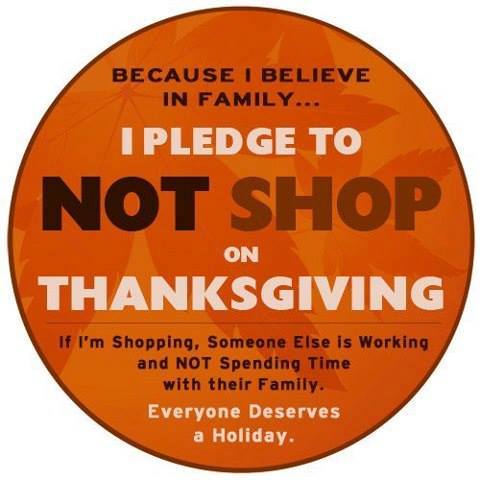
You can use your social media presence as a powerful form of storytelling and self-expression. When you post images or like pages on Facebook – or even when you use Twitter hash tags from ads or TV – you make a statement that contributes to the economy and world you live in. And you help advertisers enhance their ability to create a sense of deprivation and need – even when it does not exist. Case and point – forcing employees to work on Thanksgiving due to “consumer demand that stores are open.” Image source: Reason for the Season Facebook Community.
When you support a business that forces employees to work on this sacred holiday – which is intended to remind us of our blessings and abundance – you support and encourage a philosophy of economic oppression. Thank those who devote their lives to service all year round by not asking them to leave their families to serve you.
This practice is directly in violation of our most revered Constitutional right – freedom of religion – as it represents absolute irreverence for the concept of a holiday, or “HOLY DAY.” Irreverence for holidays is a form of social domination, which attempts to remove the very last vestiges of sacred and spiritual life. It is a historically devastating phenomenon, that has impacted the spiritual practices of cultures across the globe.
If people are forced to exchange the rituals and traditions of their cultural heritage and spirituality for economic stability, their connection with the sacred is slowly lost – and their Gods, customs and treasured memories are essentially confiscated and rendered forbidden. In it’s place is a “false idol,” or connection to a superficial, materialistic version of reality.
- As colonialists in North and South America began their oppression of native cultures, certain social and psychological measures were used to dilute and eventually replace the belief systems of the “host” culture.
- Over time, interest in one’s own cultural heritage becomes secondary to one’s interest in the dominant culture. Like a parasite, the entire system is diverted to benefit the predatory culture’s growth. When no longer of use, native cultures are cruelly discarded or cast aside – after they have surrendered all of their gifts, innovations, wealth and future generations – to sustaining their oppressors.
- Those who conform are rewarded and praised – as well as given more status and wealth than those who continue their traditional practices. In this deceptive sleight of hand, it is never revealed that these rewards fall short of fairness – offering only a meager increase in wealth and status to a select few “exemplary individuals” in the native culture – using this arrangement to destroy the internal cohesion of the culture’s people. It is particularly effective when those who had high status in the previous, traditional culture are rendered obsolete, low-status, or worse, burdensome.
- Because those who conform are favored with resources – including education, food and healthcare – natural selection will begin to favor culturally detached individuals. That is, human control of resources – including intangible psychological constructs like prestige, praise, and acceptance – may be used to induce the same adaptive shifts in survival strategy that are normally evoked through environmental, seasonal and geological changes. This manifestation of natural selection results from social and economic manipulation – artificially inducing an impetus to evolve or change – even though there is abundance rather than scarcity of resorces and social roles.
- The leadership roles of the native culture are marginalized. Indivisdal yearning for power is used to overthrow “outdated” elders, usurp important social roles, and convince the host culture that the colonialists are far more qualified and capable of assuming leadership positions.
- Those who have lost power are repeatedly assured of their fortunate position – told they are now “free” of the “burdens” and “responsibilities” of leadership and government – and that their lives are now in the capable hands of “experts.”
- At later stages, valuable social roles and occupations are withheld from those who have been historically marginalized – especially women, minorities, and any remaining descendants of native cultures.
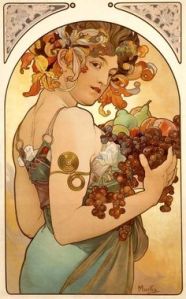
One of the most disorienting effects of spiritual suppression is the marginalization of the divine feminine, or mother goddess. Ironically monotheism seems to have originally intended to emphasize that ALL gods are one god – not that one version is superior. And the trinity is the residual symbol of a divine family – mother, father and child (i.e., ALL people, not just some) – male, female, and what is create between the two opposite energies. Harvest Goddess – Alphonse Mucha – Art-Nouveau Painter who frequently depicts godess-like women enshrouded in interwoven natural motifs. His work was popular in advertisements and posters.
- New rituals are invented, that make leadership roles sacred positions – beyond the understanding and abilities of mere “laypersons.” Certifications, degrees, permits, and other official documentation are used to disguise economic oppression and discrimination – reinforcing the superiority of anyone who has the time and money to purchase these positions. Training in advanced skills is only given at a high cost, and any stray individual who crawls up the ladder from below is burdened with crushing debt and psychological intimidation.
- People are often taught mythology that claims they will be rewarded later on in an “afterlife,” which allows greedy employers and institutions to postpone fair trade indefinitely. Cultures tend to be more susceptible to this line of reasoning when they are suffering, and feel forsaken by God, country or the “higher powers” that should be protecting them.

If people are forced to exchange the rituals and traditions of their cultural heritage and spirituality for economic stability, their ability to connect with the sacred is slowly lost. In it’s place is a “false idol,” or connection to a superficial, materialistic version of reality.
As we begin another holiday season, please take time to consider how your habits as a consumer influence and shape the lives of others. And consider what we lose when we indulge in ourselves, rather than our communities and in those who really need our help.
And when you consider the diverse beliefs of others, try to suspend disbelief. Even if a female goddess terrifies you, consider the fact that nature is not organized as a monopoly or order of important versus unimportant things. If we are ALL in God’s image, then all are partially divine. In Bhuddism, every stranger is considered a possible Bhudda, and thus revered as part of a divine energy that we all share.
Thus, reclaiming our freedom and stability involves coming to terms with our exclusionary spiritual tendencies. Not just for the divine feminine, but for the myriad of faces, names, and representations used to breathe life into a concept that we all share… In an infinite universe, one or many are both the same number – and there is no beginning nor end – just observable cycles that appear to signify these concepts.

 ~~~ Lace Exoskeleton ~~~